Feeling overwhelmed by your home after becoming a mum? It’s not mess — it’s mental load, identity shift, and a space that no longer supports you.
The realisation
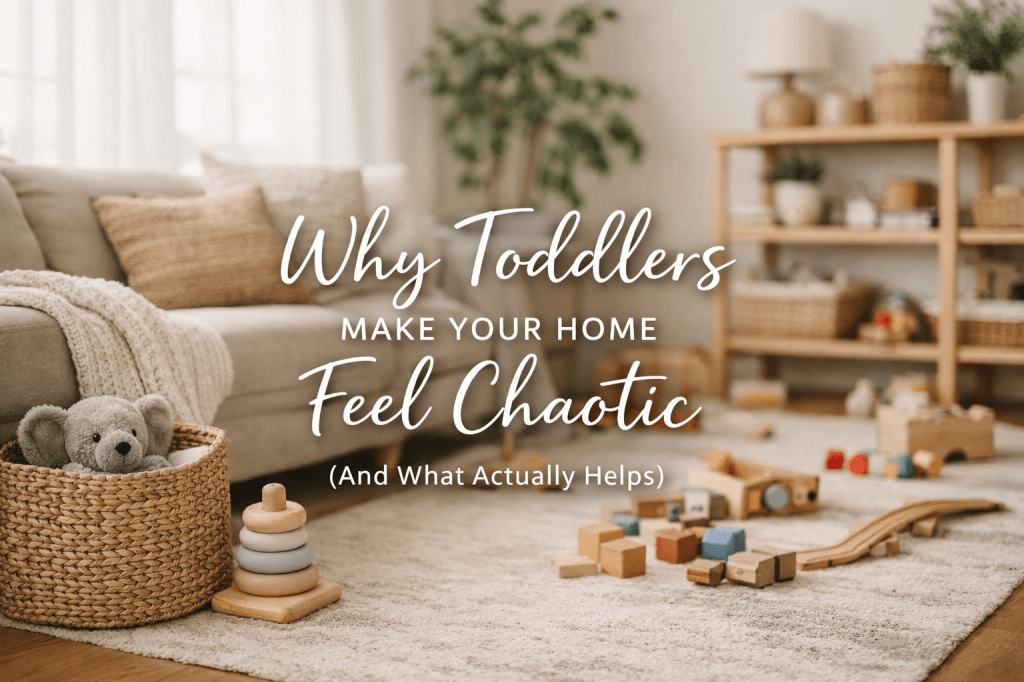
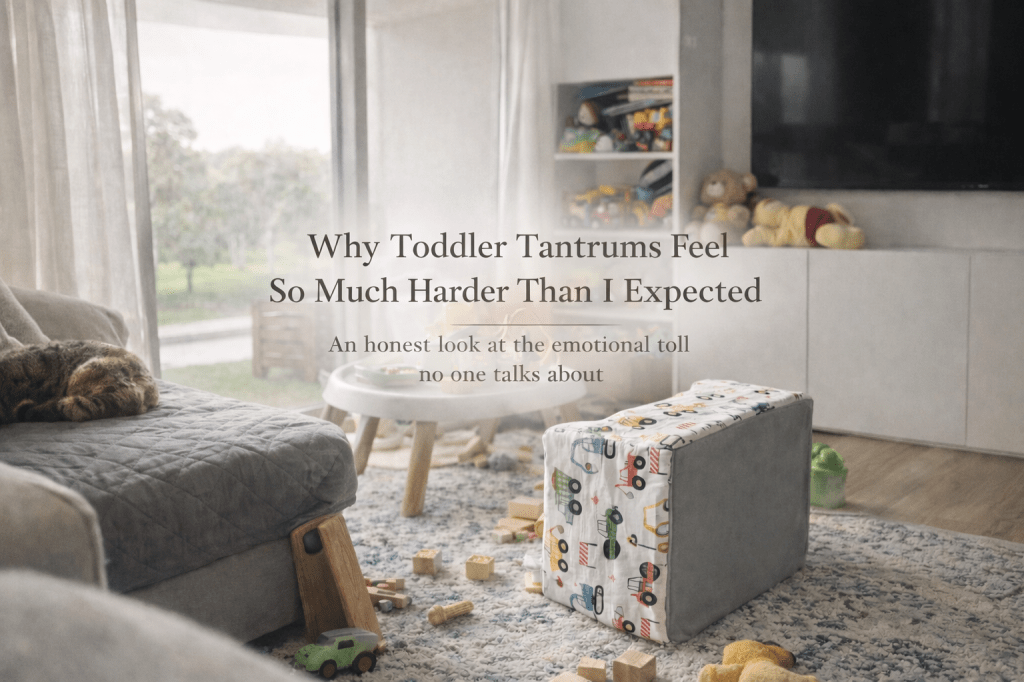
We all have those toys, tables, and ride-on cars that slowly become part of our living space.
If you’re anything like me, and storage is limited, they don’t just live in a playroom — they become part of the home décor… in a very kids’ zone, cluttered kind of way.
Morning and night turns into a quiet ritual of tidying and packing things away. Well — the toys that can be hidden.
And when guests come over?
That second room quickly becomes the holding space for all the bulky kids’ things that don’t quite belong anywhere else.
You clean. You reset. You do your best to make the house feel calm again.
But somehow, it never quite feels the way it used to.
Your home never quite feels like yours anymore, there’s a quiet disconnection.
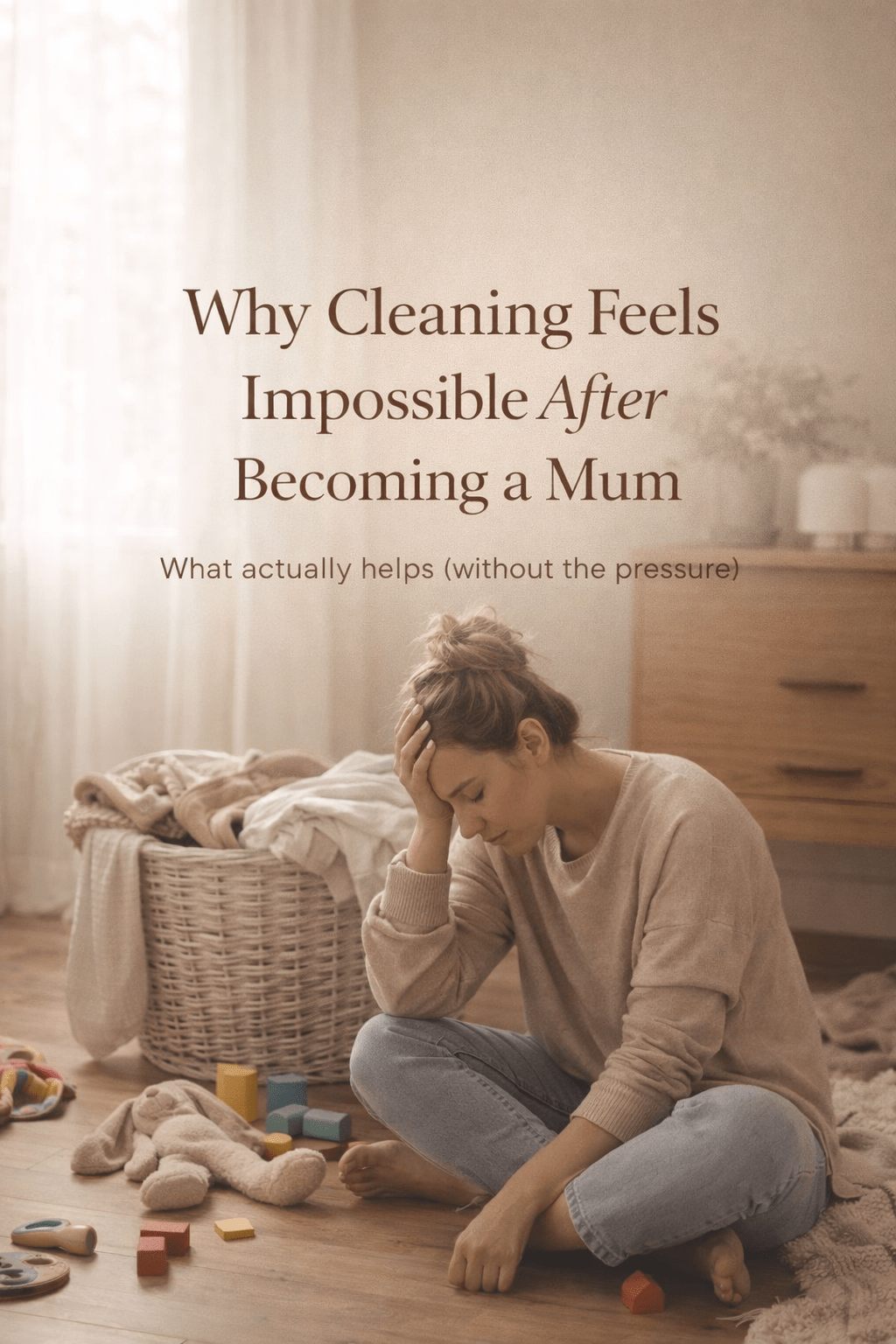
You look around and it’s not just the mess. It’s the new, kid-safe environment. The baby gates. The child locks on doors and switches. The breakables packed away, waiting for a time when it’s “safe” to bring them back out.
And you start to wonder… will you even still like those hidden pieces years from now?
As you change, your space feels like it’s been forced to change with you…quickly, abruptly, and somewhere along the way, the calmness you once felt at home feels harder to find.
And then comes the quiet thought you don’t always say out loud — why does this bother me so much? It’s just a house. Just things. I’m a mother… when would I even find the time?
Isn’t this what family homes are meant to look like? I’m sure many homes feel like this.
And while that may be true, deep down you know it’s not really about the things.
A space should work with us and gently guide us through our lives, not create more chaos inside them.
Because the truth is, the chaos you’re feeling isn’t really coming from the toys or the mess at all.
The chaos isn’t physical, it’s mental
It’s coming from something much less visible, and much more exhausting.
Our minds don’t easily switch off when we live in a space that doesn’t work with us.
Because every room quietly asks something of you.
Another decision to make. Another mental list forming. Another thing to remember to move, fix, tidy, adjust.
It doesn’t end.
You’re not just seeing toys on the floor. You’re seeing what needs to be packed away before bedtime.What needs to be moved so your child doesn’t climb it. What needs to be put higher, hidden, rearranged, rotated.
This is where the real exhaustion sits. Not in the cleaning. Not in the mess. But in the constant mental management of your home.
Your brain never gets to rest inside your own space, because your space is always asking you to manage it.
We have so much going through our heads, and it never seems to have an off switch.
You can’t walk past a room without mentally noting what needs to be done on it. You sit down to rest, but your eyes scan the room before your body does. There is always something in your line of sight quietly asking for your attention
You’re not messy. You’re mentally overloaded.
And when your environment adds to that load instead of easing it, the house that once felt calm starts to feel overwhelming — even when it’s tidy.
The identity shift inside the home
There’s another layer to this that we don’t often talk about.
Your home used to reflect you.
Your style. Your rhythm. Your preferences. The way you liked things to feel when you walked through the door.
And then motherhood arrives — and slowly, without you realising, your home stops being a reflection of who you are and starts becoming a reflection of what your child needs.
Safety over style. Practicality over personality. Access over aesthetics.
You didn’t choose to lose your style. You adapted to protect your child.
But in that adapting, pieces of you quietly disappeared from the space.
The artwork comes down. The candles move higher. The fragile décor gets packed away. The coffee table styling becomes empty space. The cushions become floor padding. The rooms become pathways, zones, barriers, and safe routes.
Your home becomes a place designed for supervision, not restoration.
And without noticing, you stop feeling restored inside it.
Because we don’t just live in our homes — we feel in them. And when the space no longer mirrors who we are, there’s a subtle emotional disconnect that’s hard to put into words.
It’s not about wanting a perfect house.
It’s about wanting to recognise yourself inside it again.
Tiny shifts that don’t demand, but support (Introducing the 3 S’s)
This is where the gentle shift happens.
Not decluttering everything. Not creating a Pinterest-perfect home. Not waiting until the kids are older.
But making small changes that allow your home to start working with you again.
This is where my 3 S’s come in:
Source Smart. Style Simply. Save Strategically.
They’re not about buying more.
They’re about thinking differently about what stays visible, what gets stored, and how your space flows for this season of life.
Source Smart Look at what you already have and ask: does this earn its place in this room right now? Not forever. Just for this period.
Style Simply. Clear sightlines create calm. When surfaces hold less, your mind holds less.
Save Strategically. Create easy, realistic homes for the bulky kids’ things — not perfect ones. Just places that make reset time quicker and less mental.
These are tiny shifts. But they reduce the constant mental conversation your house is having with you.
And that’s where the calm begins to return.
Where to start (without overwhelming yourself)
You don’t need to fix the whole house.
Start with one small surface.
A coffee table. A kitchen bench. A console. A corner of the lounge.
Remove everything from it and only put back what truly earns its place in this season.
Not what used to live there. Not what “should” live there.
Just what makes the space feel calmer to look at.
That’s Source Smart. That’s Style Simply. That’s Save Strategically — in action.
Because when one surface feels calmer, your mind does too.
And that’s how change begins in a home after motherhood — not in big resets, but in tiny, supportive shifts.
You’re not failing. Your home just needs to meet you where you are.
If your house feels chaotic since becoming a mum, it’s not because you’re messy.
It’s because:
- your role changed
- your environment changed
- but the way your space supports you hasn’t caught up yet
You deserve to feel calm in your home too.
Not one day. Not when the toys are gone. Not when the baby gates come down.
Now.
Because this season of life is demanding enough without your environment quietly adding to the load.
And when your home starts supporting you again — even in small ways, you’ll notice something surprising.
It doesn’t just feel tidier.
It feels lighter to be in.
Walk into one room today and ask yourself: Does this space support me, or silently creates more work for me?


 Her Honest Space
Leave a comment