Discover toddler room ideas that grow with your child — from beds and storage to calming colours, lighting, and safety tips for busy mums.
I’m going to be honest with you — for the first few months of your child’s life, their room often isn’t used the way we imagined. Most of us start with a dreamy nursery in mind, but in reality, your baby will likely spend those first months in your room, either in a bassinet or co-sleeping.
My own son is 18 months old and still sleeps in our room in his little bed. We’re gently transitioning him into independent sleep so when he moves into his own room, it won’t feel like a sudden shock. This has taught me something important: the “perfect” toddler room isn’t about rushing. It’s about creating a space that grows with your child, one that feels safe, adaptable, and supportive of your family’s rhythm.
So instead of rushing the move or the makeover, I’m focusing on creating a room that will grow with him — and I want to share what’s been helping me plan it all.
Start With What Grows
We’re busy mums — we don’t have the time, money, or energy to redesign a room every 3–6 months. The best toddler rooms are built around items that last:
- A bed that grows — a cot that converts to a toddler bed can save you one transition. If you choose to buy a bed straight away, add a side rail for support.
- Storage that adapts — think open cubes, baskets, or drawers that can hold toys now and school supplies later.
- Furniture that serves more than one purpose — like a dresser that doubles as a change table.
Choosing the Right Bed Size
If you’re going straight to a “big kid” bed, here’s what to keep in mind:
- Single: 92 cm x 188 cm — a simple starter option, but little ones may outgrow it quickly.
- King Single: 107 cm x 203 cm — a fantastic choice for growing kids (no dangling feet during growth spurts).
- Double: 137 cm x 188 cm — perfect if your child is an acrobatic sleeper or if you want peace of mind with extra room.
💡 Mum Tip: I personally recommend a king single or double — they’ll last for years and save you multiple upgrades.
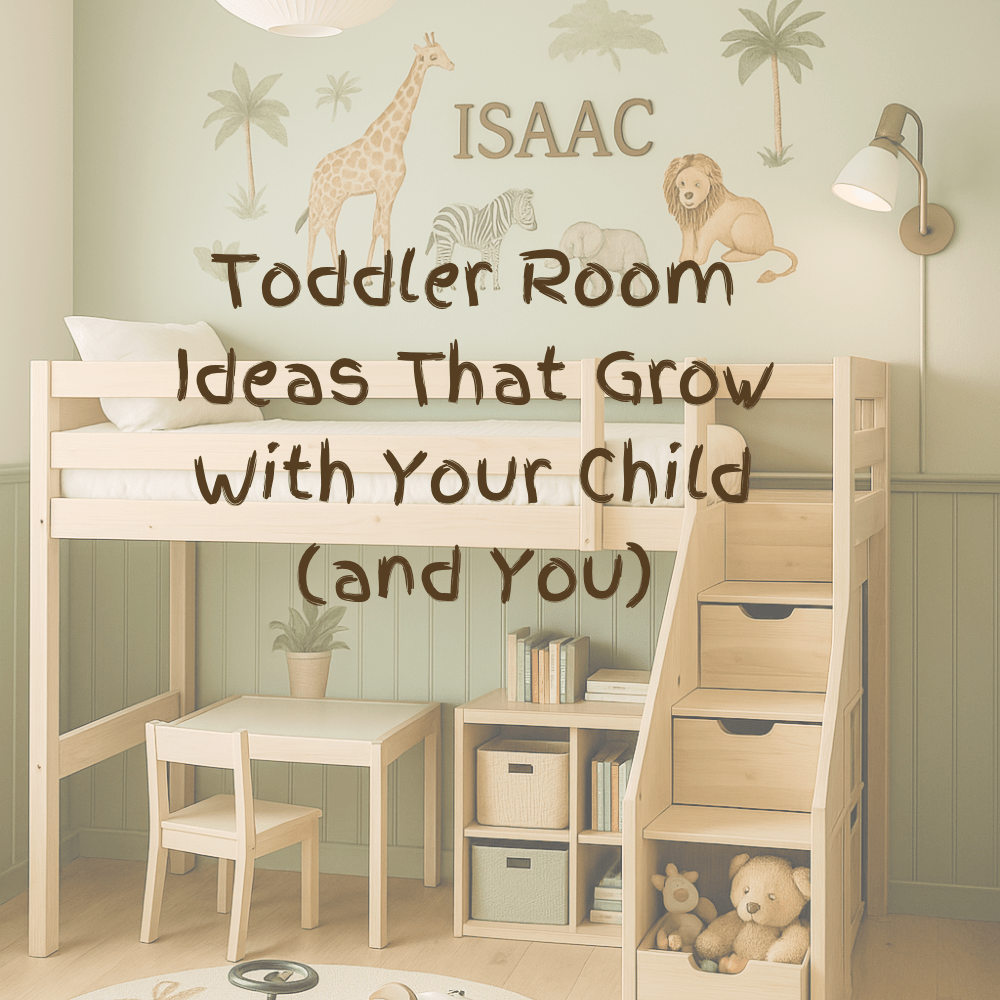
Loft Beds for Small Spaces
If you’re short on space, a loft bed can be a game-changer:
- Create a desk or play area underneath, or flip it with the bed below and play nook on top.
- Many loft beds now come with side stairs that double as storage — and let’s be real, extra storage is every mum’s dream.
⚖️ Standard sizes in Australia (approximate):
- Loft bed: 200 cm x 100 cm
- King single loft: 215 cm x 120 cm
- Also available in double or queen
✅ Always check clearance height (both above and below) to make sure it works for your child and your ceiling space before buying.
Blank Walls
Walls are often the biggest canvas in your toddler’s room, and how you treat them can set the whole mood of the space.
Paint & Colour Choices
Stick with calming, soothing tones that promote rest. If you want to introduce brighter colours, save them for small accessories like cushions, rugs, or artwork.
Colours to avoid in large doses:
- Hot pink, dark red — highly stimulating, can lead to restlessness or anxiety.
- Bright neons/orange — overwhelming and overstimulating.
- Yellow — cheerful, but bright shades can cause stress and eye strain.
- Dark brown — dull and lethargic for a child’s space
- Black — too much can feel heavy and oppressive.
- Stark white — makes a space feel sterile; opt for warmer whites instead.
Wallpaper & Removable Wallpaper
Wallpaper adds personality but can be costly. To save:
- Half-and-half walls: wallpaper on top, panelling or wainscoting below.
- Framed wallpaper: place wallpaper prints inside large IKEA frames for flexibility and style.
Removable Stickers & Decals
A budget-friendly way to update as your child’s interests change.
- Make sure your walls are prepped properly, or decals may peel paint when removed.
- Kids’ obsessions change quickly (dinosaurs, Barbie, trucks, Peppa Pig) — stickers are easy to swap without a full redesign.
Personalise the Space
It might sound simple, but personal touches matter:
- A few family photos.
- Their name on the wall or door.
These small details make a toddler’s room feel like it truly belongs to them.
Think About How the Room Will Be Used
If you’re feeling unsure where to start, you don’t need to tackle everything at once — even choosing one element can help the whole room make sense.
Before you begin decorating, take a step back and consider: What’s the role of this room in our family life?
- Shared space? Will it double as a home office or guest room?
- Play corner? Does your child need an area for toys or a reading nook?
- Storage needs? More wardrobe space? Under-bed storage?
- Future flexibility? Could you add a desk later for drawing or homework?
Planning with the future in mind will save you time and stress.
Storage That Works (Without Overwhelming the Room)
Storage, storage, storage — we love it, we need it, but if it’s not planned well it can quickly make a toddler’s room feel cluttered.
Under-Bed Storage
Perfect for extra bed linen, blankets, or seasonal items.
Pullout low containers or drawers
Toy Storage
- Baskets: great inside units, but on their own can become obstacles.
- Storage units: cube shelving with tubs, labelled drawers, or even seating with hidden compartments.
- Bookshelves: save floor space, but choose toddler-height options and rotate books to keep it safe and interesting.
✨ Mum Tip: storage can be décor too — baskets, tubs, and shelves can look stylish while keeping the room practical.
Lighting & Window Coverings
Lighting should feel fun, warm, and calming:
- General lighting: stick to warm glow; avoid harsh “daylight” tones.
- Ceiling pendant lights: soft light, not classroom-bright.
- Night lights: keep low; red light is less disruptive to sleep.
Light Bulbs
- LEDs are best — cooler to touch (safe for toddlers), energy-efficient, and versatile.
- Choose warm white (1800K–3000K).
- Go dimmable where possible.
- Use shatterproof bulbs for safety.
Directional lighting: wall sconces or bedside lamps are great for storytime.
Curtains/blinds: blackout options block morning light, helping your toddler sleep longer and wake naturally.
Safety Essentials
A toddler’s room should feel safe above all else:
- Anchor heavy furniture (bookshelves, dressers) to walls to prevent tipping.
- Keep cords out of reach (especially for blinds/lamps).
- Avoid heavy wall hangings above the bed.
- Choose non-toxic paints and finishes when possible.
- Secure windows with locks or safety latches.
Flooring & Rugs
Flooring often gets overlooked, but it sets the foundation for comfort and play:
- Rugs or play mats add warmth, cushioning, and sound absorption.
- Choose washable rugs or mats — spills and accidents are inevitable.
- A soft rug under a reading nook or play area makes the space feel inviting.
- Non-slip backings are essential to avoid trips and falls.
Final Thoughts
Designing your toddler’s room doesn’t need to be overwhelming or Pinterest-perfect. It’s about creating a space that supports them as they grow while making life easier for you.
Start with flexible furniture, think long-term about how the room will evolve, and don’t forget the small things: safe lighting, clever storage, calming colours, and personal touches.
Your child won’t remember if their room looked like a magazine spread, but they will remember that it felt safe, warm, and theirs.
💡To make it even easier, I’ve created a free Toddler Room Must-Haves Checklist — a quick guide you can save or print, with all the essentials in one place.

 Her Honest Space
Leave a comment